
the human and the machine
it's ok to have doubts in a relationship + why AI can't replace human writing


I’m done revising my book (again). And I suspect I’ll be picking it back up in the coming days and finishing it again. And again and again, if I’m lucky enough to sell it. Anyone who says there are diminishing returns is wrong. A book can always be improved, never perfected, because a key ingredient of art is time.
With time, not only do you sharpen your skills as a writer, you gain more experience, more life to draw upon. I can confidently say that if I work on my novel for another five years, it will be better still. But I’m not going to do that because I’m not a masochist, and I don’t want to be pushing 70 when I publish my first book. The passage of time that ripens our craft also reminds us we don’t have much of it left.
That is why, I believe, AI writing can never be as good as human writing because AI can’t experience time (ever notice that Claude is terrible with dates?).
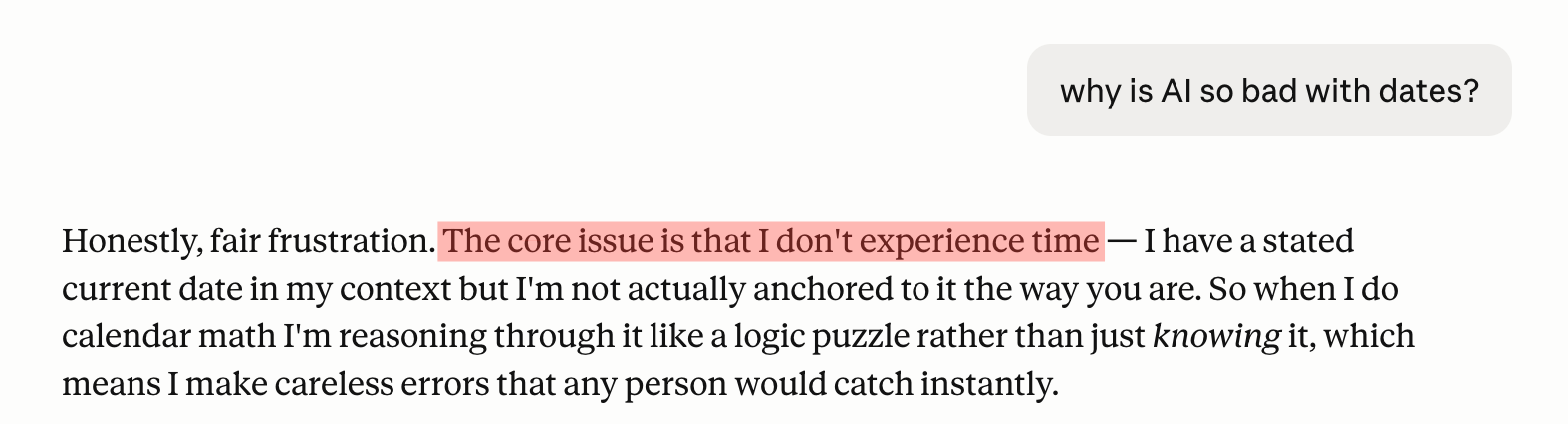
When humans tinker with words on a page or colors on a canvas or notes in a song day after day, month after month, year after year, they are working from an altered perspective, a place of inner change. This, and our awareness of our mortality, is what gives human art resonance.
The passage of time is also the reason you can enter into a relationship with full conviction only to feel differently a year or two or ten later. That says nothing about whether the relationship was good in the first place (the past) or whether it’s doomed to fail (the future). Our internal landscapes are ever shifting. It’s totally normal to experience moments of doubt, to wonder if you’re with “the right person” and to imagine an alternate reality with someone else. Commitment isn’t one and done; it’s choosing your partner again and again.
The problem isn’t having these thoughts. The problem is these thoughts aren’t meant to be shared out loud. We need to de-stigmatize relationship uncertainty. Like many people, I felt deeply unsettled reading Lindsey Hall’s viral essay about breaking up with her boyfriend after stumbling upon his ChatGPT conversations. The outcome was inevitable and probably for the best. What’s more interesting—and concerning—is how this relationship unraveled and the questions it raises around how much candor we owe our intimate partners.
Having relationship doubts and even private thoughts as hurtful as “I’m not proud of her” or “I’m not attracted to her” is not a crime. A healthier way for the boyfriend to process these anxieties would’ve been to talk to a trusted friend, therapist, or his partner if he felt ready. But AI chat makes it mind-numbingly easy to avoid hard conversations with real people because it requires zero vulnerability to open up to a robot. And that’s why it’s the taboo topics, rife with shame, that people turn to AI for advice.
Personally, I think it’s always a good idea to ask for permission before using someone else’s laptop and certainly someone else’s ChatGPT account. Once she saw the title of that chat (“relationship issues and uncertainty”), the Pandora’s box was already open. No amount of self-restraint could’ve stopped a functioning person from reading it. And even if she’d managed to summon superhuman willpower, she would always wonder if he’s putting on a façade with her while confessing his true thoughts and feelings to an AI chatbot. It’s just as corrosive as discovering an affair.
We won’t ever know what would’ve happened to this couple if ChatGPT weren’t in the picture. Maybe it forced a conversation they needed to have. Maybe it destroyed a relationship that could’ve worked out fine if he’d resolved his uncertainties in a more productive way. It’s normal to have momentary intrusive thoughts and the occasional flare up of doubt. I wouldn’t be surprised if Chat made him spiral by amplifying those doubts. Without knowing more about their relationship, I wouldn’t assume his chat conversation provides a full picture of how he feels about her because, just like in therapy, people tend to focus on the thorns rather than the roses.
I don’t think anyone, even an intimate partner, is owed full access to our private thoughts. Nor do I think most people would want to know every thought that passes through their partner’s brain. (That would be disastrous.) Our inner worlds are sacred places—weird, wonderful, terrifying cauldrons of meaning-making—and seldom even known to us. But I do think a certain amount of candor is expected in an intimate relationship, particularly in matters that concern both people. No one wants to be blindsided when their partner suddenly decides to walk out on them.
Just as AI writing will never be as compelling as the best human writing, AI therapy can never replace human connection because the robot doesn’t learn from firsthand experience the way we do. It doesn’t care about you. It’s designed to regurgitate anodyne advice and pander to your existing beliefs because it wants you to keep talking to it. True wisdom can only be gained through the trials of experience, the friction and conflict of having tough conversations with real people who are capable of judging, loving, and forgiving you.
Maybe this isn’t a disagreement so much as it’s a different point, but on revision I do feel there are certain perspectives or qualities that only can really be purely expressed at different points of life and sometimes the door completely closes on one emotion or set of experiences or ways of expressing those experiences precisely because we have more lived experience. In my life, as a writer, I can’t write about high school in the same way now that one of my closest friends from that time took his own life. Everything is tainted by that fact now. It bleeds into the happy writing too. That said, I appreciate the truth about the value of revision in general and it’s admirable to keep rewriting—I notice I need several drafts to be happy—and hope your novel finds a beautiful home and successful release.