
voyeurs
what reality tv taught me about storytelling


I spent the second half of August on a Love Island bender. It was bad. But it was also so good. Studying human drama is one of the greatest pleasures of my life, and this show is a gold mine of messy emotions.
Admittedly, it can feel like brain rot when you lose count of how many episodes you’ve blown through in one sitting, and some of the criticism levied against reality TV is deserved. Real people get thrown in situations that are designed to hijack their nervous system, fire up their insecurities, and rip open their childhood trauma. Sure, they’ve implicitly signed up for this, but that doesn’t make it any less exploitative. The shows that are about finding love get labeled “trashy” because they reveal the mean, shallow, ugly parts of human nature, the petty jealousies, the gossip and backstabbing, the cheating.
Despite the genre’s bad rap, Love Island is not without something resembling nutrition. The pressure-cooker environment the show creates compresses everything you might learn about relationships over several years of your life into a single summer. For example, Huda’s and Jeremiah’s storyline, spanning roughly 17 episodes of Season 7, is a crash course in setting boundaries and exercising emotional control. Despite the flak she got from the internet, I found Huda’s intense, visceral emotions painfully recognizable. I’ve made similar mistakes, learned the same hard lessons, in my life.
Obviously, no media can replace real-world experience, but in showing us how these men and women respond in high-pressure situations and the repercussions of their actions, the show gives us valuable raw material to extract whatever lessons we may and affirm what we know to be true from our own lives.
Every good story is a fantasy in that it engages the imagination. We would never find ourselves in some of the highly-charged situations depicted on the show, but we get to experience the drama vicariously through the islanders and exercise our own judgment in imagining what we would do in their shoes. It’s called parasocial risk-taking. It’s the reason we enjoy movies about serial killers. They allow us to simulate being in danger and rehearse our own survival strategies. It’s thrilling because we’re not in any real danger.
What’s unique about reality TV compared to scripted shows is we get to figure out who these people are and predict the choices they’ll make while they’re figuring themselves out. In the process of being proven right or wrong, we revise and confirm our theories about them. It’s like psychology and sociology 101 in action.
From a structural perspective, Love Island runs into trouble when it has both viewers ranking their favorite islanders and the islanders themselves voting for who to kick off the show. What “America” wants isn’t always what the islanders want. We want to see drama. The islanders want to make it to the end and get voted best couple. Naturally, they’re going to dump anyone perceived to be competition or whoever they don’t get along with (remember they have to be around each other 24/7). This runs the risk of killing off interesting storylines. You need flawed and “unlikeable” characters to create conflict.
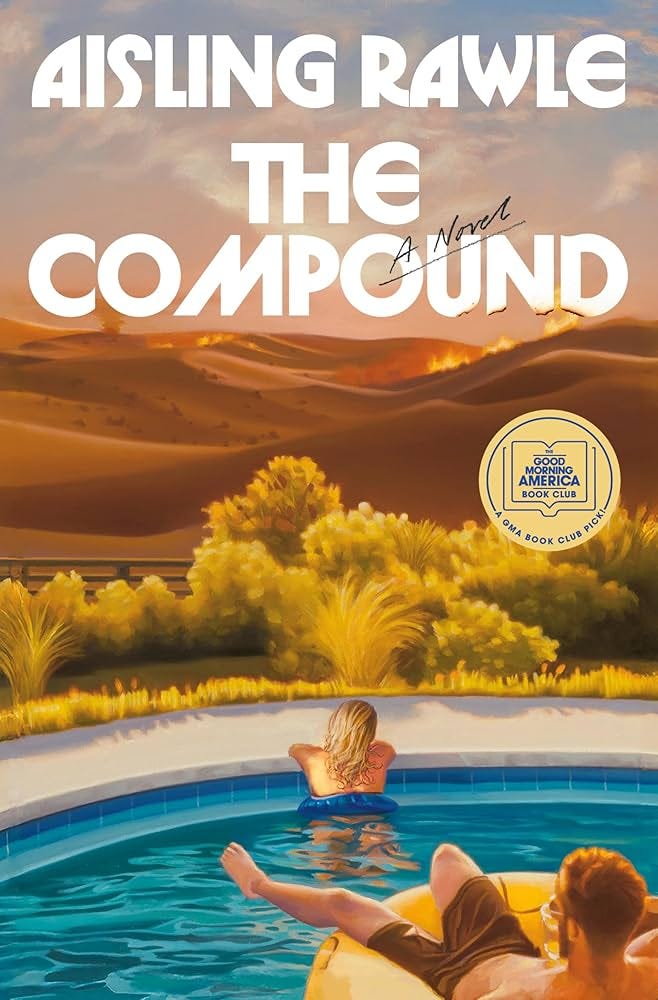
Aisling Rawle’s novel The Compound—pitched as Love Island meets Lord of the Flies (or, as I think of it, Survivor)—gets around this problem by creating a closed game where the only people who have the power to kick someone out of the compound are the contestants, and the contestants only want one thing: to be the last one standing. In any successful story, the main source of tension is always tied to the character’s driving motivation. And in The Compound, the motivation for playing—winning money and fame—creates a competition for resources (including romantic alliances) in order to survive and stay in the game.
I read this novel in two blistering nights. Not since Liz Moore’s The God of the Woods has a story made me think: this is what I want to do as a writer. I would argue that it’s even more addictive than the dating show that inspired it because the stakes escalate not only through human vs. human conflict, but as the challenges progress, through human vs. nature, and ultimately, human vs. self. The book is a masterclass in tension, conflict, and stakes.
Hurtling toward the end of August, I found myself eager to wrap up my Love Island binge. It’s a seasonal indulgence best suited for the hot, languid months of summer. Once fall hits, I tell myself, I’m getting off this train. I think what all this reality TV has reaffirmed for me is my love of fiction and my raison d’être as a novelist, which is to tell stories that illuminate the tragedy and comedy of being human. I don’t care if what I write is lowbrow or highbrow, commercial or literary. My ambition as a writer is simple: I want to make people feel their emotions.
“I want people to feel emotions” - so powerful!
I connect with what you’re sharing here, the psychological interest that reality tv can evoke and with the slightly shameful brain rot too that comes with it. Funnily enough though, that guilt can trigger me to take action to compensate such as continue researching and writing my own book or immerse myself in reading (which who knows, maybe wouldn’t have happened so intensely if I hadn’t indulged to begin with). Thanks for the book recommendations with this post - both sound very up my street. Curious to see what stories may arise for you through this process!